

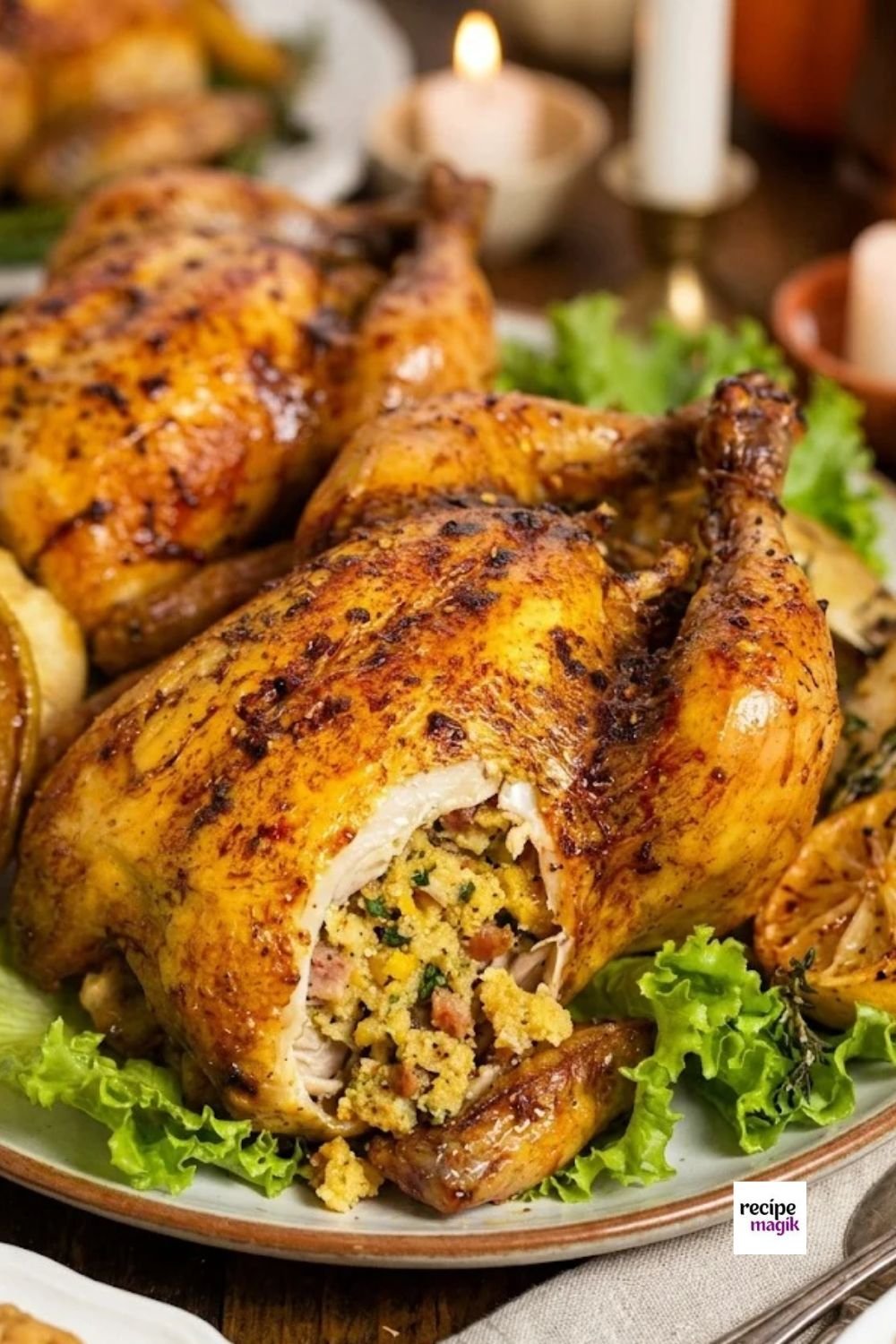
Cornish Hens stuffed with Cornbread dressing on your mind? Kudos🎉 You are going to make the best Thanksgiving Dinner ever! Pair it with these Most-loved Thanksgiving Sides and these delectable, most popular Thanksgiving desserts for the best party!
Whether you are hosting an intimate dinner or a lively holiday table, you can build out the rest of the menu with these Most-loved Thanksgiving Sides and finish things off with delectable, most popular Thanksgiving desserts so nothing feels rushed.

This stuffed Cornish game hen recipe is the perfect match if you are thinking about a low-key Thanksgiving party with few guests and more fun. Anyway, I think roasting a whole Turkey is way too much pressure on the belly (not complaining about that, though 😀)

The recipe starts with making the stuffing for Cornish hens. And, in this recipe, I've made Everyone's favorite Southern Cornbread Dressing.
I've also glazed the Cornish hens with Butter, Maple Syrup, lemon juice, and a pinch of ground cinnamon.
By the time it roasts, your home will be filled with a rich, citrusy, buttery, sweet aroma of maple and lemon.
What makes Cornish hens shine for small gatherings is how effortless the plating feels—no carving a massive bird while guests wait in the living room. You can prep the cornbread dressing and whisk together the maple-lemon glaze a day ahead, so all you have left to do on dinner day is stuff, tie, baste, and let the oven do the heavy lifting
What are Cornish hens?
Cornish hens are a breed of chicken that is smaller than a normal chicken.
When I say smaller than a usual chicken, think young chickens 4 to 6 weeks old. They shouldn't weigh more than 900 grams, or almost 2 pounds.
They taste pretty much the same as regular chicken. They are easy to cook and serve whole.
Is a Cornish hen healthier than chicken?
Yes. That's a no-brainer. 😎
Because Cornish hens are smaller, they contain less fat, which means fewer calories. They are high in protein and Vitamin B12.
They are rich in niacin, which helps lower cholesterol and boosts brain function.
Roasted to perfection in the oven, you can also make Cornish hens in the air fryer.
You can also make Cornish hens in a Dutch oven, slow cooker, or Instant Pot.
Stuffed Cornish hens for Thanksgiving/holidays
Customizing these stuffed Cornish hens with bread stuffing is also easy, and you can add the stuffing according to your liking.
What to stuff Cornish hens with?
There are endless possibilities when it comes to stuffing; the most common is Cornish hens stuffed with wild rice. You can also make mushroom-stuffed Cornish hens, sausage-stuffed Cornish hens, or Simply Cheese Stuffed Cornish hens.
Perfect for special occasions like Thanksgiving and the holiday season, this recipe makes everyone feel incredibly special.
Imagine getting one single whole roasted chicken on your plate! Isn't that exciting? This reminds me of these Easiest No-Bake Layered Pumpkin Pie Cheesecakes, where you don't get just one piece of the pie but an entire Mini Cheesecake.

How to cook stuffed Cornish hens
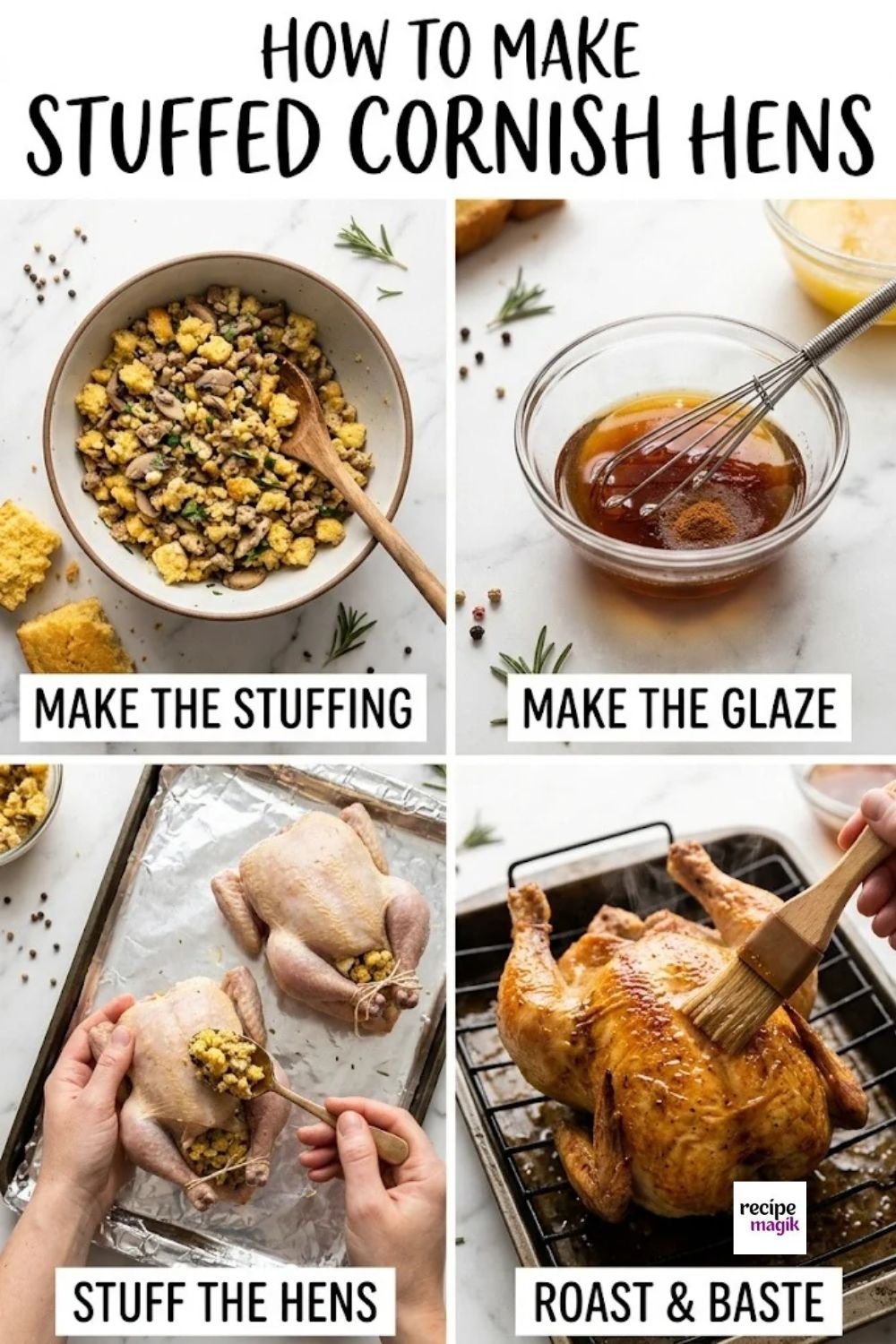
Step 1: Make the Stuffing
Follow the instructions for the Southern Cornbread Dressing Recipe with sage pork sausages, cremini mushrooms, fresh herbs, and condensed cream of Chicken Soup.
Step 2: Make the Glaze
Before you roast or stuff the Cornish hens, make the glaze. Start by combining Pure Maple Syrup, Softened Butter, and Lemon Juice in a small bowl.
Step 3: Baking Cornish Hens
- Remove the Cornish hens from the refrigerator and let them thaw for at least 30 minutes.
- Remove Giblets from the Cornish hens and rinse them thoroughly. Pat them dry with paper towels.
- Preheat oven to 425 degrees F. Place the rack in the lower third of the oven. Place a roasting rack on a foil-lined rimmed baking sheet.
- Grease the roasting rack with non-stick cooking spray.
- Season the cavities with salt and pepper.
- Spoon about 1/2 cup of stuffing loosely into the cavity of each Cornish hen.
- Use kitchen twine to tie the legs together. Tuck the chicken wings under the chicken.
- Arrange the Cornish hens on the roasting pan, keeping space for the Air to circulate.
- Brush the tops of these Cornish hens with melted butter and sprinkle with salt and pepper.
- Roast for 20-25 minutes.
Because maple syrup contains natural sugars, brushing it on too early can cause dark spots before the meat finishes cooking. Starting at 425°F sets the skin and builds color, while dropping to 375°F and basting every 10 minutes lets that citrus-maple sheen layer up evenly without burning
Step 4: Reduce Temperature and Continue Roasting
Reduce the temperature to 375 degrees F and continue roasting for another 40-45 minutes. Baste the Cornish hens with maple and lemon glaze every 10 minutes.
Step 5: Check the Cornish hens and get them out of the oven
Use an Instant-read thermometer at the thickest part (thigh) of the Cornish hen and check if the temperature registers 180 degrees F. Make sure the juices run clear. Let them rest for 10 minutes, then serve them to your guests.
PRO TIP: Save the drippings from the pan you bake in and drizzle them all over the meat before serving. 🤞
How long to cook Stuffed Cornish hens
Cook stuffed Cornish hens until the juices run clear. And that's not it. To be extra sure, use an instant-read thermometer in the thickest part of the Cornish hen (especially the thighs) and check the internal temperature. If it reaches an internal temperature of 180 degrees F, your stuffed Cornish hens are fully cooked.

Do you cover Cornish hens when baking?
Yes, but only if you find your Cornish hens browning really fast. Every oven works differently.
It depends on your oven's wattage. If they brown quickly, then you do need to cover your Cornish hens with aluminum foil before baking.
What temperature should Cornish hens be cooked at?
How to Serve?
Cornish hens are served whole. One hen for one person.
You could serve them with sides like Mashed Potatoes or Cheesy Green Beans.
What are the Perfect Sides to go with Cornish Hen?
Roasted Cornish Hens taste good with almost anything... almost anything you can think of! My personal favorite is mashed potatoes (served in a southern way). But here are a few other items you could choose from:
- Glazed Carrots - Maple-glazed carrots make a classic side with stuffed Cornish hens.
- Hasselback Potatoes - Another fancy potato dish you could serve as a side.
- Mac and Cheese - Kids love cheesy mac and cheese with these stuffed Cornish hens
- Fresh Broccoli and Corn Salad - A healthy broccoli salad works so well with this.
- Dinner Rolls - I love keeping pillowy soft dinner rolls as a side with this.
- Mushroom Quinoa - Instead of rice, I like to use quinoa with Oyster Mushrooms.
- Sweet Potatoes - I like to serve my Cornish hen with Sloppy Joe stuffed sweet potatoes.
Tips to Make the Best Stuffed Cornish Hens
- Don't pack the cavity tight: Stuffing expands as it heats and absorbs moisture. Keeping it loose (around 1/2 cup per hen) lets hot air circulate so both the dressing and the inner meat cook evenly.
- Use extra dressing as a side: Any leftover cornbread dressing can be baked in a small greased dish alongside the hens—great if you have hungry guests or want extra crispy edges.
- Save a spoonful of glaze unbrushed: Set aside a small amount of the maple-butter-lemon mixture before basting so your brush never carries raw-poultry juices back into the bowl.
- When coating the hens with the seasoning, use your hands to ensure the whole chicken is covered.
- Make sure you keep the roasting pan on a rimmed baking sheet.
- Baste (brush) the Cornish hen with maple and lemon glaze every 10 minutes.
- Using a digital thermometer to check if the hens are done will be much more helpful than guessing. Your hens will turn out perfectly and will not be overcooked or undercooked.
- Don't forget to save the leftover drippings from the pan so you can drizzle them over the hens when you serve them.
Storage instructions:
Refrigeration- You can store the leftovers for up to 4 days in the fridge.
Freezing – If you want to store the leftovers in the freezer, you can keep them for up to 3 months.
How to reheat and serve again – The Roasted Cornish hens can easily be reheated in the microwave. Try to keep some of the pan drippings too so that when you reheat it, the hens won’t dry out.
Some More questions you might ask:
1. How do you know when a Cornish hen is done?
The typical way to know a Cornish hen is done is to ensure that the juices run clear.
If you have a cooking/ food thermometer, check the internal temperature of the hens. It should be 180 degrees F in the thickest part, which is the thigh. This is the most foolproof way to ensure your Cornish hen is done.
2. How to keep Cornish hens from getting dry?
To keep the Cornish hens moist, let the chicken rest for about 8 minutes before you carve it.
3. How to make the skin extra crispy?
About 12-24 hours before you plan to roast the hens, sprinkle salt all over them. Then, when you bake them, the skin will be crispy.
4. What else can I make with these hens?
You can use the leftover hens to make a variety of things. You could use them to make sandwiches or salads.
5. Can I make stuffed Cornish hens without kitchen twine?
Yes. If you don't have kitchen twine, tuck the wing tips snugly under the body and gently cross the legs—keep the stuffing modest so it doesn't spill out while roasting.
6. How many Cornish hens should I buy per person?
Plan on one whole Cornish hen per adult (typically around 1.25 to 1.5 pounds each). If you're serving kids or pairing the meal with heavy sides like Mac and Cheese and Dinner Rolls, half a hen or sharing can work well too
More Recipes you can try:
- Crispy Whole Roasted Duck
- Roasted Whole Cauliflower
- How to cut a whole chicken into Small Pieces
- Oven Baked Chicken Thighs with Apricot Jam Recipe
- Sheet Pan Harvest Baked Apple Chicken with Sweet Potatoes

Cornish hens stuffed with cornbread dressing
Ingredients

Method
- Thaw the cornish hens in the refrigerator for 2-4 hours before cooking
- Make the southern cornbread dressing as per the instructions.
- In a small bowl combine the ingredients for glaze and keep it aside.
- Preheat oven to 425 degrees F.
- Rinse the cornish hens with running water. Pat them dry using a paper towel.
- Season the outside of cornish hens lightly with salt and freshly cracked black pepper.
- Line a rimmed baking sheet with foil. Place a roasting rack on the rimmed baking sheet. Grease the rack with non-stick cooking spray.
- Clean the hens and remove the giblets. (inside stuff)
- Season the cavity of cornish hens with salt and pepper.
- Spoon ½ cup of stuffing into the cavity of the cornish hens. Spoon them loosely. Packing more than that will make the stuffing fall off.
- Tie the legs closely using kitchen twine. Arrange the cornish hens in a way that leaves space for the air to circulate.
- Quickly combine unsalted melted butter with freshly minced garlic, chopped rosemary, and chopped thyme to make herbed butter
- Brush the top and sides of the cornish hens herbed butter.
- Roast in the lower rack of the oven for 20-minutes.
- Reduce the temperature of the oven to 375 degrees F.
- Roast for an additional 45-50 minutes or until the juices run clear.
- Baste the cornish hens with maple and lemon glaze every 10-minutes.
- NOTE: if you find your cornish hens turning too brown too quickly, cover them with foil after the 15 or 20-minute mark.
- Make sure you check the internal temperature of cornish hens using an instant-read thermometer. Ensure the thickest part of the meat (the thighs) reaches an internal temperature of 165 degrees F.
Notes
- Make the dressing and glaze ahead: You can prepare the Southern Cornbread Dressing Recipe and whisk together the maple, lemon, and butter glaze a day ahead, then store both covered in the refrigerator so dinner prep goes smoothly.
- Keep the stuffing loose: Spoon about 1/2 cup of dressing gently into each cavity rather than packing it tightly. Stuffing expands as it heats and absorbs juices, and overpacking can slow even cooking or push dressing out.
- Watch the glaze and browning: Because maple syrup contains natural sugars, basting every 10 minutes after dropping the oven to 375°F helps build a glossy finish without scorching. If the skin or dressing browns too fast, tent the hens loosely with foil.
- Verify doneness and let them rest: Check the thickest part of the thigh (and the center of the dressing) with an instant-read thermometer, and let the hens rest for about 8–10 minutes before untying the twine and serving so the juices redistribute.
- Save the pan drippings: Reserve the flavorful drippings from the baking sheet/pan to drizzle over the hens right before serving or to keep leftovers moist when reheating.
- Bake extra dressing separately: If you have leftover cornbread dressing, bake it in a small greased dish alongside the hens for extra crispy edges and plenty of servings for seconds.
Libba says
When do you begin basting the hens every ten minutes?
Thanks!
Anjali says
just after it gets cooked for 45 min, you can begin basting the hens
Deirdre Kelly says
What can you substitute for the glaze if you don’t want it to be sweet?
Thank you
Anjali says
You can skip maple syrup and just use melted butter and lemon juice for the glaze if you don't want it sweet.