

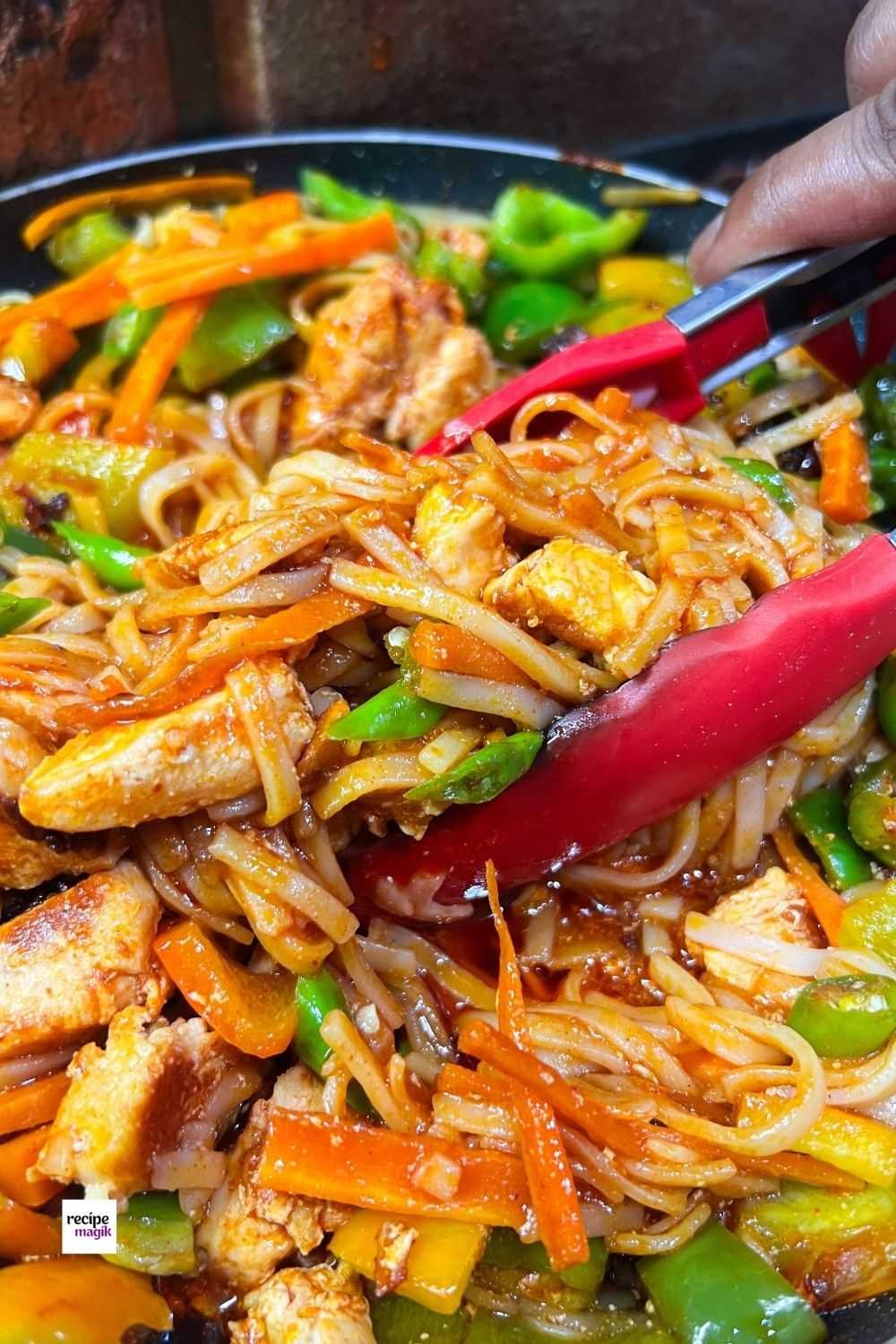
Spicy Korean noodles or butter gochujang chicken noodles are a spicy and absolutely incredible noodle recipe that is easy to make, perfect for sneaking in vegetables, relatively low in carbs, and an ideal weeknight dinner for when you are craving takeout Korean food but want to make it with simple homemade ingredients right in your own kitchen. 😋🇰🇷🍜🥢
Jump to:
- Why This Recipe Works So Well 😋
- Gochujang Noodles (Spicy Korean Noodles) 🥢
- The Noodles: Glass Noodles and the Japchae Connection 🍜
- Building the Dish: Vegetables, Chicken, and Assembly🤌🏻✨
- Buttery Gochujang Chicken Noodles 🍜🥢🇰🇷
- 🍽️ INGREDIENTS
- 🧑🍳 STEP BY STEP INSTRUCTIONS
- Variations Worth Trying 🇰🇷
- A Few Tips Before You Cook 🧑🍳⭐️
- Buttery Gochujang Chicken Noodles
If you love quick skillet meals like this, you should also try my popular Cajun Shrimp Pasta / Skillet or One Pot Chicken Alfredo
This is a super easy and straightforward dish that comes together in just 20 to 30 minutes, making it one of those go-to meals that feels indulgent without demanding much from you, making it one of those go-to meals that feels indulgent without demanding much from you. It fits right into a collection of your Easy dinner recipes or Chicken dinner recipes, that save busy evenings.
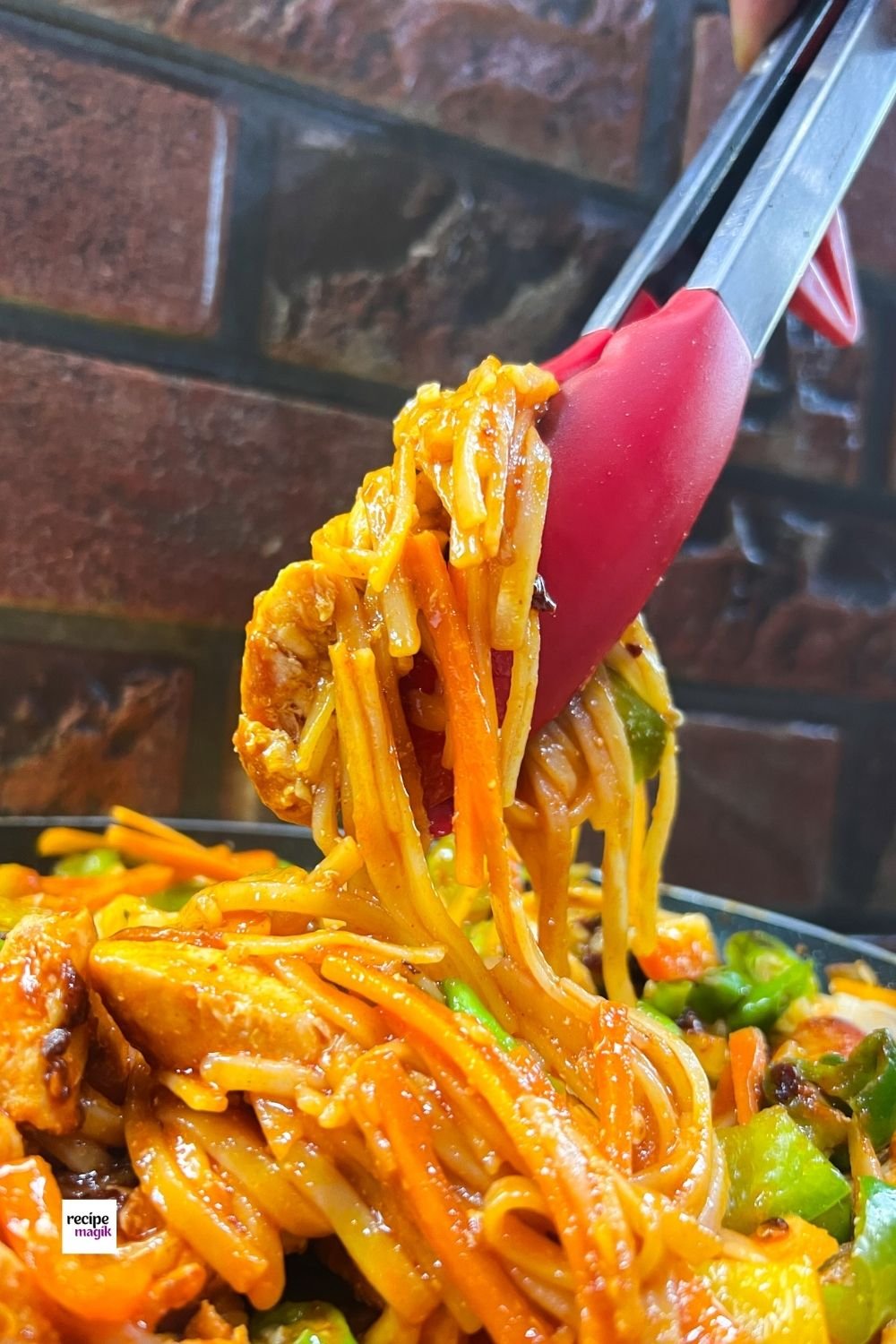
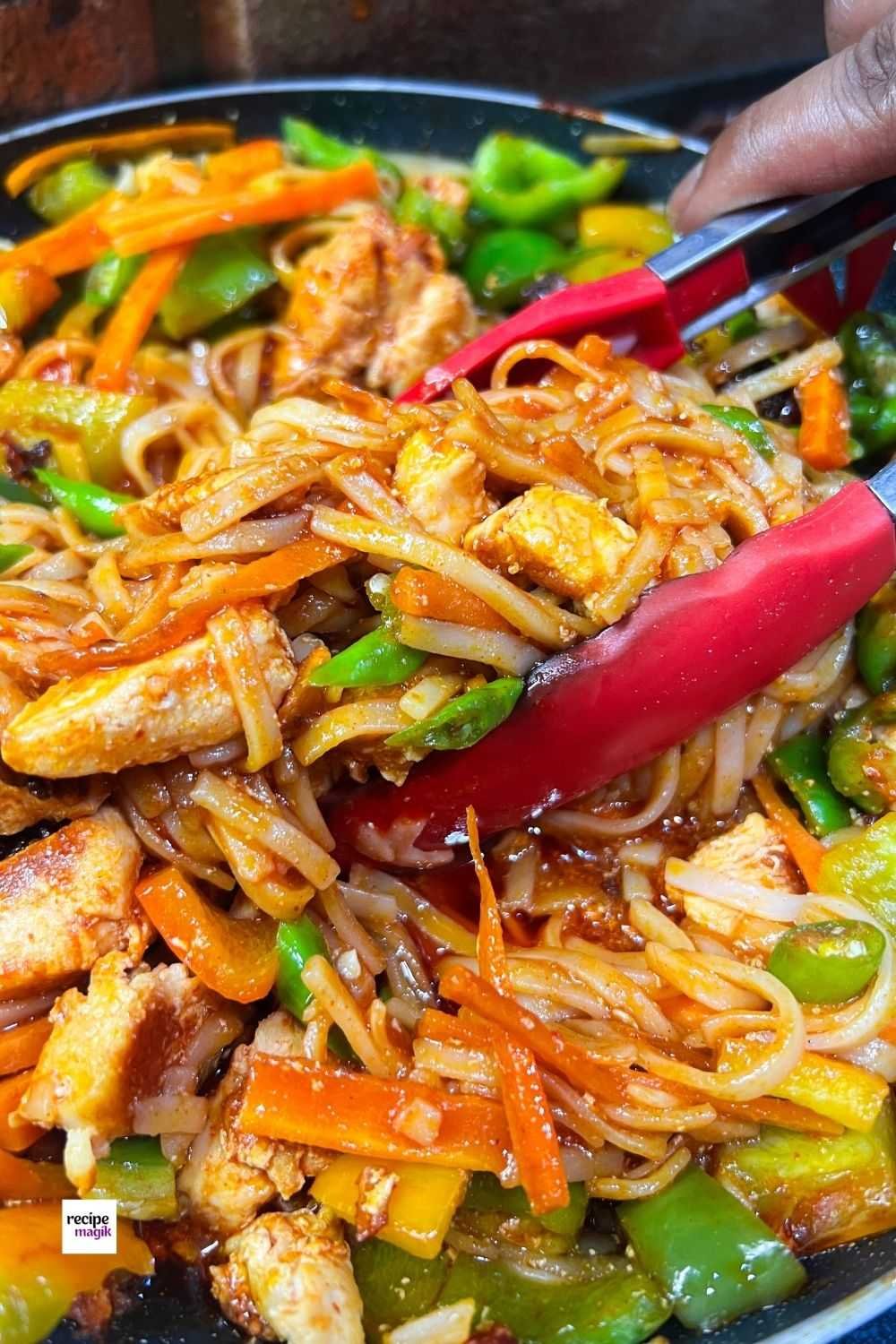
The combination of bold gochujang heat, silky glass noodles, crispy golden chicken, and colorful vegetables makes this a complete meal that hits every note you want from a satisfying dinner.
If you enjoy crispy chicken with a punchy glaze, you'll love my Hot Honey Chicken Skillet or these Sticky Sesame Chicken meatballs for your next dinner
Why This Recipe Works So Well 😋
There is something deeply comforting about a bowl of noodles that delivers both heat and richness at the same time.
Most people associate spicy food with a kind of aggressive, one-dimensional burn, but this Korean noodles recipe easy enough for any home cook does something smarter. It balances fire with fat. Love Korean recipes? try these Gochujang Chicken Meatballs Recipe or these Korean Fried Chicken Recipe which is an all time favorite recipe of ours.
The secret ingredient in this version, and the thing that makes it stand apart from most recipes you will find online, is butter. Not a small amount either. Two full sticks of unsalted butter go into the sauce, and that might sound alarming at first, but it is genuinely the move.
Fat carries flavor. It coats the noodles in a way that water-based sauces simply cannot, and when you combine the richness of butter with the deep, fermented complexity of gochujang paste, something magical happens.
The sharpness of the chili is softened just enough that the full flavor profile of the paste can come through rather than just the heat.
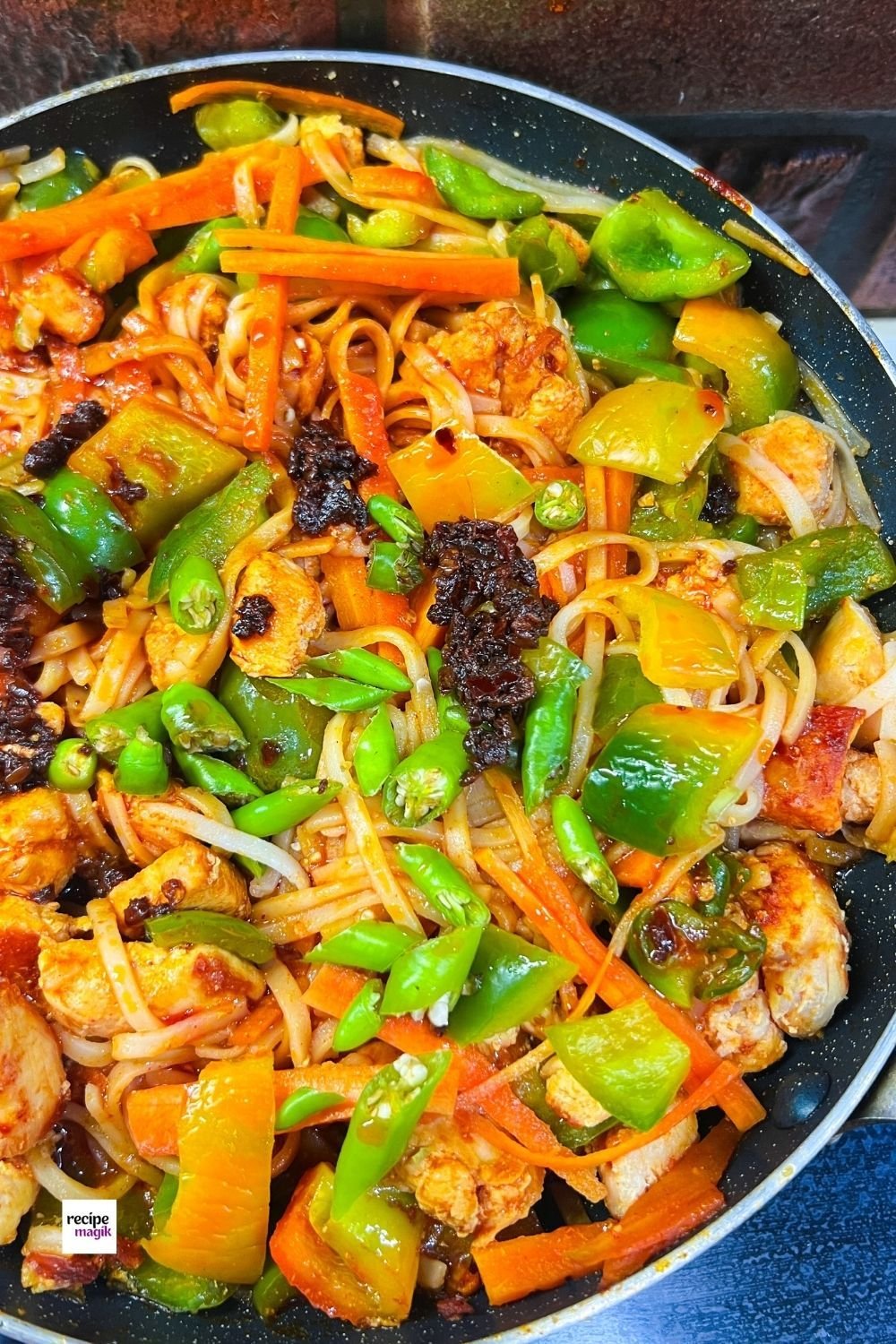
The result is a sauce that clings to every strand, every piece of chicken, every vegetable, and makes each bite feel cohesive and deeply satisfying. This is not a light dish. It is meant to feel like a treat.
Gochujang Noodles (Spicy Korean Noodles) 🥢
Let us talk about gochujang noodles for a moment, because this sauce is the entire personality of the dish.
Gochujang is a Korean fermented chili paste made from red peppers, glutinous rice, fermented soybeans, and salt.
It has been a staple in Korean cooking for centuries and carries a depth that goes far beyond just being spicy.
There is a natural sweetness to it, a slight sourness from fermentation, and a savory umami quality that makes it incredibly versatile. This balance of heat and depth is similar to what makes Bang Bang Shrimp and this Firecracker Chicken so popular on the blog.
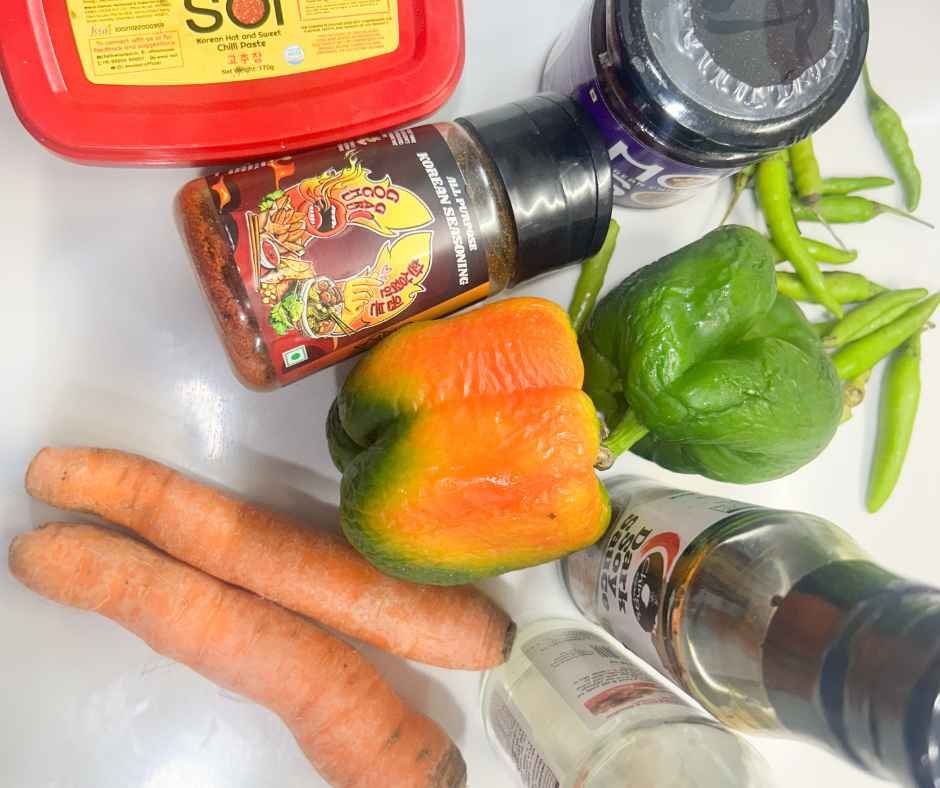
In this recipe, the sauce is built in a jar, which keeps things simple and clean. You combine two sticks of unsalted butter with gochujang paste, Korean chili powder for additional heat, Korean chili oil for a fragrant kick, sesame oil for nuttiness, dark soy sauce for a deep savory note, and rice wine vinegar for brightness and balance. Building intense flavor profiles using simple sauces is a trick I use often, especially in my Schezwan Noodles Recipe and my easy Black Pepper Noodles or this 10-Minute Creamy Curry Udon Noodles or Miso Sesame Udon Noodles or this users favorite (10-min) Chili Garlic Udon Stir Fry
A little water is added to loosen it all up so it pours easily and coats the noodles without clumping. This jar sauce can actually be made ahead of time and stored in the refrigerator, which makes this a genuinely fast weeknight meal.
My specific trick of adding butter alongside the gochujang is what makes this recipe different from a standard Korean spicy noodles recipe.
The fat in the butter emulsifies with the other liquids to create a glossy, deeply flavorful sauce that feels restaurant-quality.
It rounds off the sharp edges of the chili and makes the dish palatable even for people who are not usually fans of very spicy food.
If the spice level is still too much for your preference, a teaspoon or two of honey or brown sugar stirred into the sauce before adding it to the pan will pull things back without losing any of the depth.
The Noodles: Glass Noodles and the Japchae Connection 🍜
This recipe uses glass noodles, also known as Korean sweet potato starch noodles or dangmyeon, which is the same type of noodle used in japchae, one of the most beloved and iconic dishes in Korean cuisine.
Traditional japchae is a Korean noodles recipe featuring vegetables and seasoned beef stir fried together, tossed with these translucent, slightly chewy noodles. It is festive, flavorful, and often served at celebrations and holidays in Korea.
This gochujang butter version takes inspiration from that classic japchae format: noodles plus vegetables plus protein, all brought together in a well seasoned sauce.
Where japchae leans savory and mildly sweet, this version cranks up the heat and richness. The glass noodles are perfect for this because they are neutral in flavor, absorb sauces beautifully, and hold their texture well even after tossing and cooking.
To prepare them, simply place the dry noodles in a bowl and cover with warm tap water. Let them soak for 10 to 20 minutes until they are pliable and softened.
Drain them well and set them aside. There is no need to boil them separately, which keeps the process streamlined and reduces the number of pots on the stove.
Building the Dish: Vegetables, Chicken, and Assembly🤌🏻✨
One of the best things about this Korean noodles recipe easy to adapt for any home is that the vegetable component is entirely flexible. This is a great refrigerator cleanup dish, meaning you can use whatever vegetables you have on hand. In this version, edamame, carrot cut into thin matchstick strips, and both red and green bell peppers go into the skillet. The colors are vibrant and beautiful, and the textures complement each other well.
That said, bok choy is a wonderful addition if you have it, and baby spinach, kale, or any other leafy green will wilt down nicely into the dish.
Cabbage works well too. The goal is to cook the vegetables in a skillet with a little butter until they are just slightly softened but still have some texture. A small amount of salt at this stage helps draw out the natural moisture from the vegetables and deepens their flavor.
While the vegetables are cooking, the chicken gets its own dedicated skillet, which is important.
Chicken breast is chopped into small, roughly one inch bite-sized pieces and cooked in sesame oil only over high heat.
The goal here is to get a serious sear on the chicken, something that develops a golden, crispy, slightly charred exterior while the inside stays juicy.
Do not crowd the pan. Give the pieces space so they develop that caramelized crust rather than steaming. This step makes a significant difference to the overall texture of the finished dish because those crispy edges hold up even after the sauce is added.
To get that perfect golden crust on the chicken before tossing it in the sauce, you want a hot pan. For more ways to master juicy, crispy chicken, you can use an air fryer and check out my Air Fryer Firecracker Shrimp or these Air Fryer Chicken Tenders or Curry Fried Chicken (air fryer)
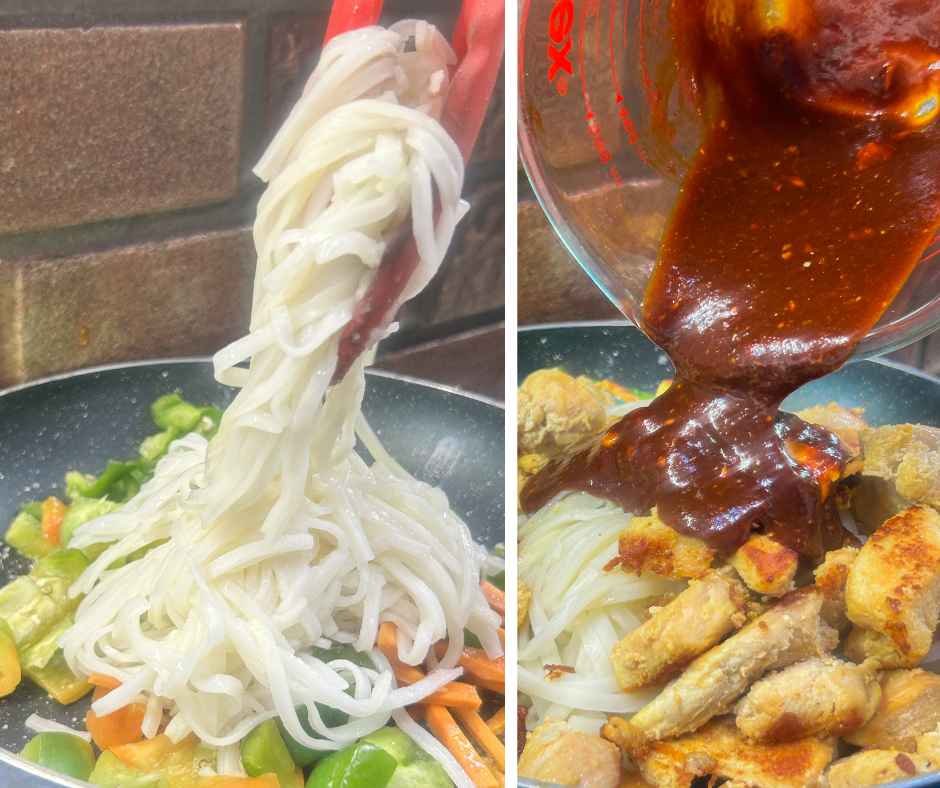
Once both the vegetables and the chicken are ready, the soaked and drained glass noodles are added to the vegetable skillet. Sneaking vegetables into a rich, savory sauce is one of my favorite kitchen hacks. I do the same thing in my Sheet Pan dinners from this Lemon Garlic Chicken Roast in Sheet Pan and this family-favorite (20-min) Sheet Pan Roasted Sausage & Veggies
The cooked chicken goes in next, and then the jar sauce is poured over everything. Toss and stir over medium heat until everything is combined, glossy, and well coated. The noodles will absorb the sauce quickly, so this final step only takes about two to three minutes. Serve immediately.
Buttery Gochujang Chicken Noodles 🍜🥢🇰🇷
Spicy, rich, and deeply satisfying Korean glass noodles with crispy chicken and colorful vegetables, all tossed in a buttery gochujang sauce. Ready in 30 minutes.
🍽️ INGREDIENTS
- 200 grams glass noodles (dangmyeon / sweet potato starch noodles)
- 400 grams chicken breast, cut into 1 inch bite-sized pieces
- 226 grams unsalted butter (for sauce)
- 3 tablespoons gochujang paste
- 1 tablespoons Korean chili powder (gochugaru)
- 1 tablespoons Korean chili oil
- 1 tablespoons sesame oil (for sauce)
- 2 tablespoons dark soy sauce
- 1 tablespoons rice wine vinegar
- 3 tablespoons water (for sauce)
- 1 tablespoons sesame oil (for cooking chicken)
- 2 tablespoons unsalted butter (for cooking vegetables)
- 0.5 cups edamame (shelled)
- 1 carrot, cut into thin matchsticks
- 1 red bell pepper, thinly sliced
- 1 green bell pepper, thinly sliced
- 0.5 teaspoons salt
🧑🍳 STEP BY STEP INSTRUCTIONS
- Soak the noodles: Place 200 grams glass noodles (dangmyeon / sweet potato starch noodles) in a large bowl and cover completely with warm tap water. Let them soak until pliable and softened, then drain well and set aside.
- Make the sauce: In a jar or bowl, combine 226 grams unsalted butter (for sauce), 3 tablespoons gochujang paste, 1 tablespoons Korean chili powder (gochugaru), 1 tablespoons Korean chili oil, 1 tablespoons sesame oil (for sauce), 2 tablespoons dark soy sauce, 1 tablespoons rice wine vinegar, and 3 tablespoons water (for sauce). Stir or shake well until everything is fully mixed and smooth. Set the sauce aside at room temperature.
- Cook the chicken: Heat 1 tablespoons sesame oil (for cooking chicken) in a skillet over high heat until very hot. Add 400 grams chicken breast, cut into 1 inch bite-sized pieces in a single layer, giving the pieces space. Cook without stirring for 2 to 3 minutes until deeply golden and charred on the bottom, then toss and continue cooking until all sides are crispy and cooked through. Remove from heat and set aside.
- Cook the vegetables: In a separate large skillet or wok, melt 2 tablespoons unsalted butter (for cooking vegetables) over medium-high heat. Add 1 carrot, cut into thin matchsticks, 0.5 cups edamame (shelled), 1 red bell pepper, thinly sliced, and 1 green bell pepper, thinly sliced. Stir fry until the vegetables are just slightly softened but still have some bite. Season with 0.5 teaspoons salt and toss to combine.
- Combine everything: Add the drained soaked noodles to the vegetable skillet, followed by the cooked chicken. Pour the jar sauce over everything and toss well over medium heat until all the noodles, chicken, and vegetables are evenly coated and glossy.
- Serve immediately: Divide into bowls and serve right away while the noodles are silky and the chicken is still crispy. Optionally top with a soft boiled egg, a drizzle of extra sesame oil, or a sprinkle of sesame seeds.
NOTES:
To adjust spice: Stir 1 to 2 teaspoons of honey or brown sugar into the sauce before adding it to the pan to tame the heat without losing flavor depth.
Vegetable swaps: This is a great refrigerator cleanup recipe. Bok choy, baby spinach, kale, cabbage, or any greens you have on hand all work well in place of or alongside the listed vegetables.
Protein variations: Swap chicken for rib eye fillet (about 3.5 oz per serving) cut into thin strips and seared quickly in sesame oil, or use thick-sliced fresh shiitake mushrooms for a hearty vegetarian version.
Soft boiled egg topping: Bring water to a boil, gently lower in eggs, and cook for exactly 6 to 7 minutes. Transfer to an ice bath, peel, and slice in half over the finished noodles.
Make ahead: The jar sauce can be made up to 3 days in advance and stored in the refrigerator. Bring to room temperature before using.
Reheating: Add a splash of water when reheating leftovers as the noodles will have absorbed more sauce as they sit.
Variations Worth Trying 🇰🇷
This recipe is a Korean noodles recipe chicken lover's dream in its base form, but there are a few variations that are absolutely worth exploring depending on what you have available or who you are cooking for.
For a more elevated and slightly luxurious version, swap the chicken breast for rib eye fillet, about 3.5 ounces per serving, cut into thin strips. Rib eye has enough fat to handle high heat beautifully, and the beef plays extremely well with the gochujang butter sauce.
Sear the strips quickly in sesame oil until just cooked through and slightly charred at the edges.
If you are cooking a Korean noodles recipe vegetarian that still feels substantial and hearty, fresh shiitake mushrooms are an outstanding protein substitute.
Their meaty texture and deep umami flavor make them a natural partner for the gochujang sauce. Slice them thick and cook them the same way you would the chicken: hot pan, sesame oil, high heat, until golden and slightly crispy at the edges.
For a finishing touch that adds richness and a beautiful presentation, place a soft boiled egg on top of each serving. A 6 to 7 minute egg with a jammy, barely set yolk is ideal.
When you break it over the noodles and let the yolk run into the sauce, it creates an extra layer of creaminess that takes the whole dish to another level entirely. This small addition elevates the best Korean noodles recipe from weeknight dinner to something you would happily serve to guests.
A Few Tips Before You Cook 🧑🍳⭐️
Korean chili powder, also called gochugaru, is different from generic red chili flakes and worth seeking out at an Asian grocery store or ordering online. Its flavor is fruity and moderately spicy with a gentle smokiness that is distinct and irreplaceable. Korean chili oil adds fragrance and a different dimension of heat than the paste alone.
Dark soy sauce is thicker and more intense than regular soy sauce, and a small amount goes a long way. If you only have regular soy sauce, use a slightly smaller amount to avoid oversalting. Rice wine vinegar brings acidity that cuts through the richness of the butter and keeps the sauce from feeling heavy.
This dish is best eaten immediately after making it while the noodles are silky and the chicken is still crispy. Leftovers reheat reasonably well but the noodles will absorb more sauce as they sit, so you may want to add a splash of water when reheating.
Buttery gochujang chicken noodles are the kind of recipe that immediately earns a permanent place in your weeknight rotation. It is fast, flexible, deeply flavorful, and endlessly adaptable.
If you can't get enough of bold, comforting noodle bowls and quick takeout clones, add these to your weekly menu:
- Thai Red Curry Noodle Soup
- Schezwan Noodles Recipe
- Easy Lo Mein Noodles
- Shrimp Udon Stir Fry
- (10-min) Chili Garlic Udon Stir Fry
- Honey Garlic Udon Noodles
Whether you are making the classic version with chicken and colorful vegetables, going the beef route with rib eye for something special, or keeping it plant-based with shiitake mushrooms for a Korean noodles recipe vegetarian option that sacrifices nothing in terms of satisfaction, the result is consistently excellent.
The combination of gochujang heat and butter richness is one of those pairings that seems unconventional until you try it, and then it makes complete, obvious sense.
This is Korean spicy noodles recipe cooking made approachable for any home kitchen, built from pantry staples and whatever vegetables you have on hand. Make it once and you will understand why it is worth keeping gochujang in your refrigerator at all times. 😋🫶
Buttery Gochujang Chicken Noodles
INGREDIENTS
- 200 gm glass noodles
- 500 gm chicken breast cut into 1 inch bite-sized pieces
- 1 stick unsalted butter
- 2 tablespoon Gochujang paste
- 1 tablespoon Korean chili powder (gochugaru)
- 1 tablespoon Korean chili oil
- 1 tablespoon sesame oil for sauce
- 2 tablespoon dark soy sauce
- 1 tablespoon rice wine vinegar
- 3 tablespoon water for sauce
- 2 tablespoon sesame oil (for cooking chicken)
- 2 sticks unsalted butter for cooking the veggies
- ½ cup edamame shelled
- 2 medium sized carrots cut into thin matchsticks
- 1 medium sized bell pepper diced (i use both red and green)
- ½ teaspoon salt

INSTRUCTIONS
- Place 200 grams glass noodles (dangmyeon / sweet potato starch noodles) in a large bowl and cover completely with warm tap water. Let them soak until pliable and softened, then drain well and set aside.
- In a jar or bowl, combine 1 stick of unsalted butter (for sauce), 3 tablespoons gochujang paste, 1 tablespoons Korean chili powder (gochugaru), 1 tablespoons Korean chili oil, 1 tablespoons sesame oil, 2 tablespoons dark soy sauce, 1 tablespoons rice wine vinegar, and 3 tablespoons water (for sauce). Stir or shake well until everything is fully mixed and smooth. Set the sauce aside at room temperature.
- Heat 1 tablespoons sesame oil (for cooking chicken) in a skillet over high heat until very hot. Add 500 grams chicken breast, cut into 1 inch bite-sized pieces in a single layer, giving the pieces space. Cook without stirring for 2 to 6 minutes until deeply golden and charred on the bottom, then toss and continue cooking until all sides are crispy and cooked through. Remove from heat and set aside.
- In a separate large skillet or wok, melt 2 tablespoons unsalted butter over medium-high heat. Add 1 carrot, cut into thin matchsticks, 0.5 cups edamame (shelled), bell pepper thinly sliced. Stir fry until the vegetables are just slightly softened but still have some bite. Season with 0.5 teaspoons salt and toss to combine.5
- Add the drained soaked noodles to the vegetable skillet, followed by the cooked chicken. Pour the jar sauce over everything and toss well over medium heat until all the noodles, chicken, and vegetables are evenly coated and glossy.
- Divide into bowls and serve right away while the noodles are silky and the chicken is still crispy. Optionally top with a soft boiled egg, a drizzle of extra sesame oil, or a sprinkle of sesame seeds.
Ask Me Anything