

There is a special kind of comfort that fills a home when a golden roasted turkey comes out of the oven for Thanksgiving. The rich aroma drifting through the kitchen brings everyone together, creating instant memories around the dining table. But as any passionate home cook knows, the celebration does not end when the meal is over. In fact, the next step in the kitchen is often where the real adventure begins.
Managing leftover turkey is an art form, and I find so much joy in transforming today's feast into tomorrow's comforting soup, cozy casserole, or hearty sandwich. Yet, almost every holiday season or family gathering, a familiar question pops up while I am packing away leftovers.
Jump to:
Can you safely refreeze turkey once it has already been thawed?
The short answer is yes, you absolutely can safely refreeze turkey. However, doing it right requires an understanding of basic food safety rules and kitchen care. I used to feel uncertain about putting thawed meat back into the freezer, always worrying if I was compromising quality or risking anyone's health.
Over years of testing recipes and managing a busy family kitchen, I have learned that as long as you follow proper thawing methods and handle your turkey with respect, refreezing is a completely safe and wonderful way to prevent food waste.
Understanding The Safe Thawing Rule
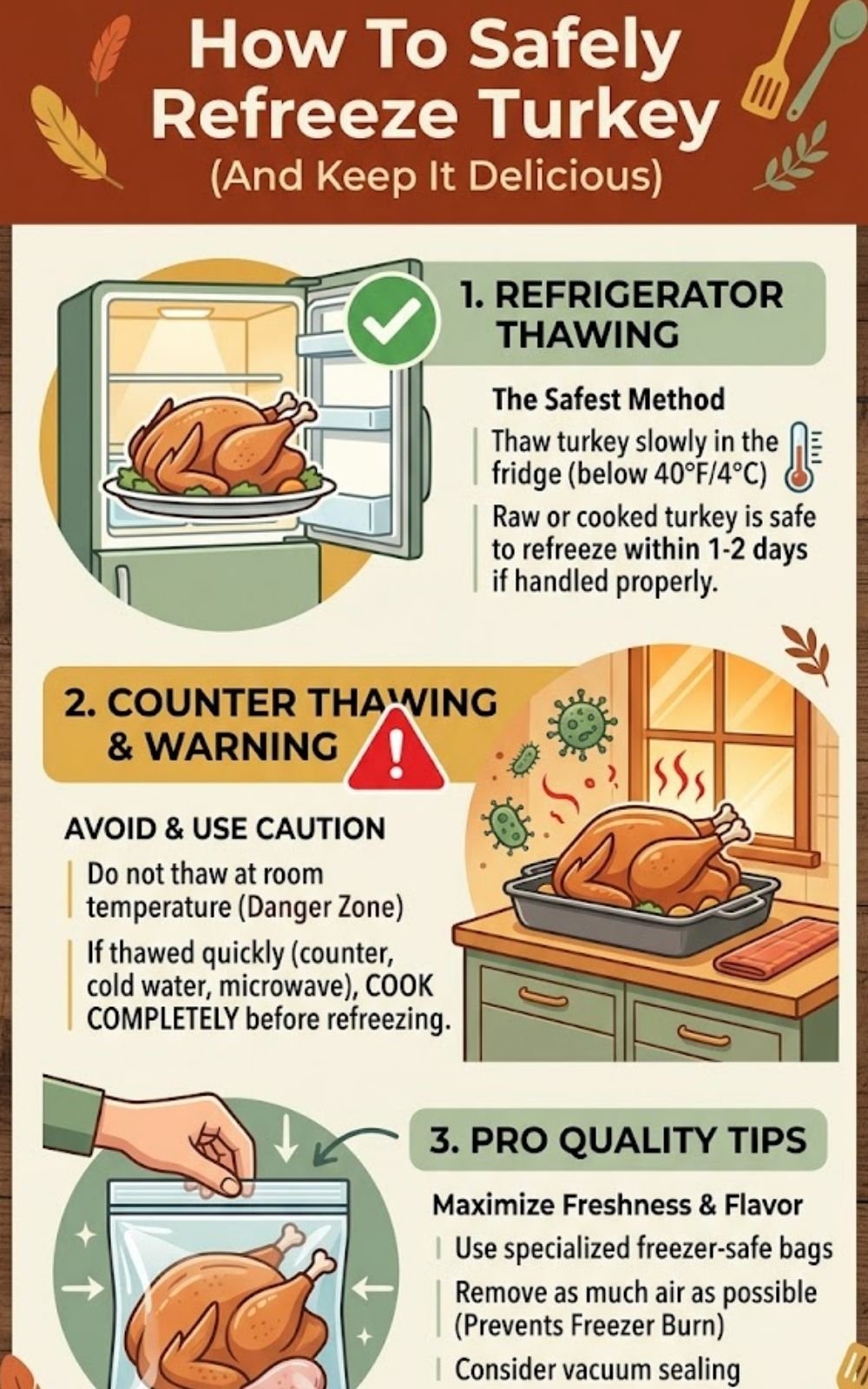
The single most important secret to safely refreezing turkey lies entirely in how you thawed it in the first place. If you thawed your turkey in the refrigerator, you are completely safe to put it right back into the freezer.
When turkey thaws slowly inside a cold refrigerator kept at or below forty degrees Fahrenheit, bacteria do not get the chance to multiply into dangerous territory. The meat stays within a safe temperature zone the entire time, keeping it wholesome and completely fine to refreeze, whether it is raw or already cooked.
On the other hand, if you thawed your turkey on the kitchen counter at room temperature, in warm water, or using a microwave, you should never refreeze it raw. Room temperature creates what food safety experts call the danger zone. When meat warms up between forty degrees and one hundred forty degrees Fahrenheit, bacteria can grow very rapidly.
Even if you freeze it again later, those bacteria may survive or leave behind harmful toxins. Whenever I thaw turkey using quick methods like cold water baths or microwave defrosting, I make it a rule to cook the turkey completely before even thinking about freezing it again.
Plan your Thanksgiving Menu
- 70 Easy Thanksgiving Appetizers
- The Best Fall Appetizers to Serve This Season
- Thanksgiving Slow Cooker Sides Recipes
- 30 Make-Ahead Thanksgiving Dishes which you can freeze
- 60+ Most Loved Thanksgiving Sides Recipes You ought to Try
- Best Classic Southern Thanksgiving Recipes
- Last Minute Thanksgiving Sides that dont let down
- Last Minute Thanksgiving Treats everyone will love
- 80+ Easy Thanksgiving Desserts Recipes to Impress the Crowd
- Thanksgiving Desserts & Treats which are almost too cute to eat
- 30 Comforting Thanksgiving Pies to Sweeten Your Feast
- Cosy Thanksgiving Tablescapes to Impress Guests
Raw Turkey vs. Cooked Turkey Refreezing
It helps to look at raw turkey and cooked turkey as two slightly different kitchen situations. If you bought a raw frozen turkey or a raw turkey breast and thawed it safely in the refrigerator, you can refreeze it within one to two days without cooking it first. This is a lifesaver when dinner plans change at the last minute and you realize you will not be cooking the bird this weekend after all.
For cooked turkey, the rules are equally simple and very forgiving. Suppose you roasted a whole turkey, enjoyed a wonderful dinner, and now have plenty of leftovers. You can safely freeze those cooked leftovers right away.
If you later thaw a portion of cooked turkey in the fridge to make turkey salad or a hot sandwich, but end up not eating it all, you can safely refreeze that cooked turkey again. The golden rule remains the same: as long as the cooked turkey was thawed in the refrigerator and kept cold, it can go back into the freezer.
Protecting Taste, Texture, and Flavor
While safety is my top priority in the kitchen, keeping food delicious comes in as a very close second. It is honest to admit that every time you freeze, thaw, and refreeze meat, you lose a tiny bit of moisture. Freezing forms small ice crystals inside the cell walls of the turkey. As the ice thaws, moisture escapes, which can leave the meat slightly drier than before. However, with a few loving kitchen tricks, you can protect the texture and flavor so that every bite remains delicious.
To preserve maximum quality when refreezing turkey, exposure to air must be completely avoided. Air is the enemy of frozen food because it causes freezer burn, which creates dry patches and stale flavors. Whenever I pack turkey for the freezer, I use heavy duty freezer bags or airtight glass containers. If I am storing sliced cooked turkey, I like to press wrapping film directly against the surface of the meat before sealing the bag or container lid. Removing as much air as possible works wonders for maintaining flavor.
Transforming Thawed Leftovers into Delicious Meals
If you are worried that refrozen turkey might end up a bit dry, the solution is simple and delightful: pair it with moisture! Refrozen cooked turkey is absolute perfection for dishes that cook in savory liquids. I love taking thawed turkey slices and dropping them into a bubbling pot of vegetable soup, a rich pot pie filling, or a slow cooked creamy casserole. The turkey absorbs all the wonderful herbs, broths, and spices, making it just as tender and flavorful as the day it was first cooked.
Another great trick I use often is adding a splash of turkey broth or gravy over sliced turkey before sealing it in a freezer container. Freezing the turkey in its own juices acts like a protective shield against moisture loss. When you thaw and warm it up later, it emerges moist, juicy, and ready to serve.
Basic Steps For A Happy Kitchen
Cooking at home should always feel comforting, never stressful. By keeping a few clear practices in mind, you can approach your meal planning with complete confidence:
- Keep track of time: Raw turkey thawed in the fridge should be refrozen within two days, while cooked turkey leftovers should ideally be frozen within three to four days of initial cooking.
- Label everything clearly: Always write the date on your freezer bags or containers so you can manage your pantry easily.
- Store for optimal quality: When properly wrapped to exclude air, refrozen turkey maintains excellent quality and flavor for up to three months.
Kitchen work is all about nourishing the people we love while making smart, practical choices. Knowing that you can safely refreeze turkey gives you freedom in the kitchen, reduces unnecessary food waste, and ensures that the warmth of a holiday meal lasts for weeks to come.
Ask Me Anything