

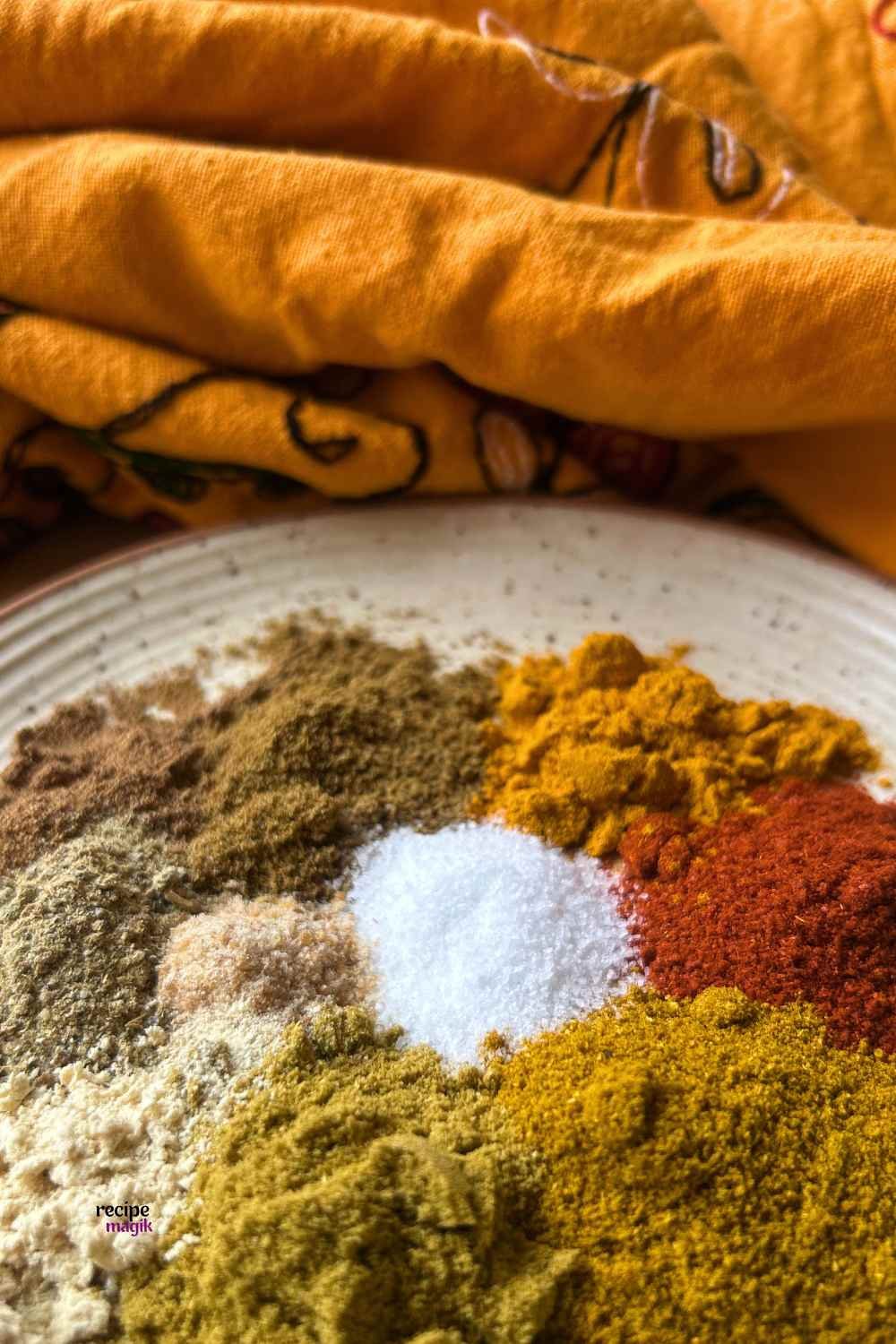
Commercial curry powder found in Western supermarkets is a myth. It is a Westernized convenience product that rarely reflects the complexity, depth, or reality of a traditional Indian kitchen. This homemade curry powder recipe strips away the fillers and flat flavor profiles of store-bought alternatives, delivering an authentic, highly versatile spice blend.
By combining foundational earthy elements like coriander and cumin with the warmth of garam masala, cinnamon, and nutmeg, this blend streamlines Indian cooking. It eliminates the need to measure out eight different ground spices every time you cook. Instead, a single spoonful provides the exact aromatic foundation required for authentic curries, marinades, and dry roasts. Try my more Homemade Seasoning Recipes.
Jump to:
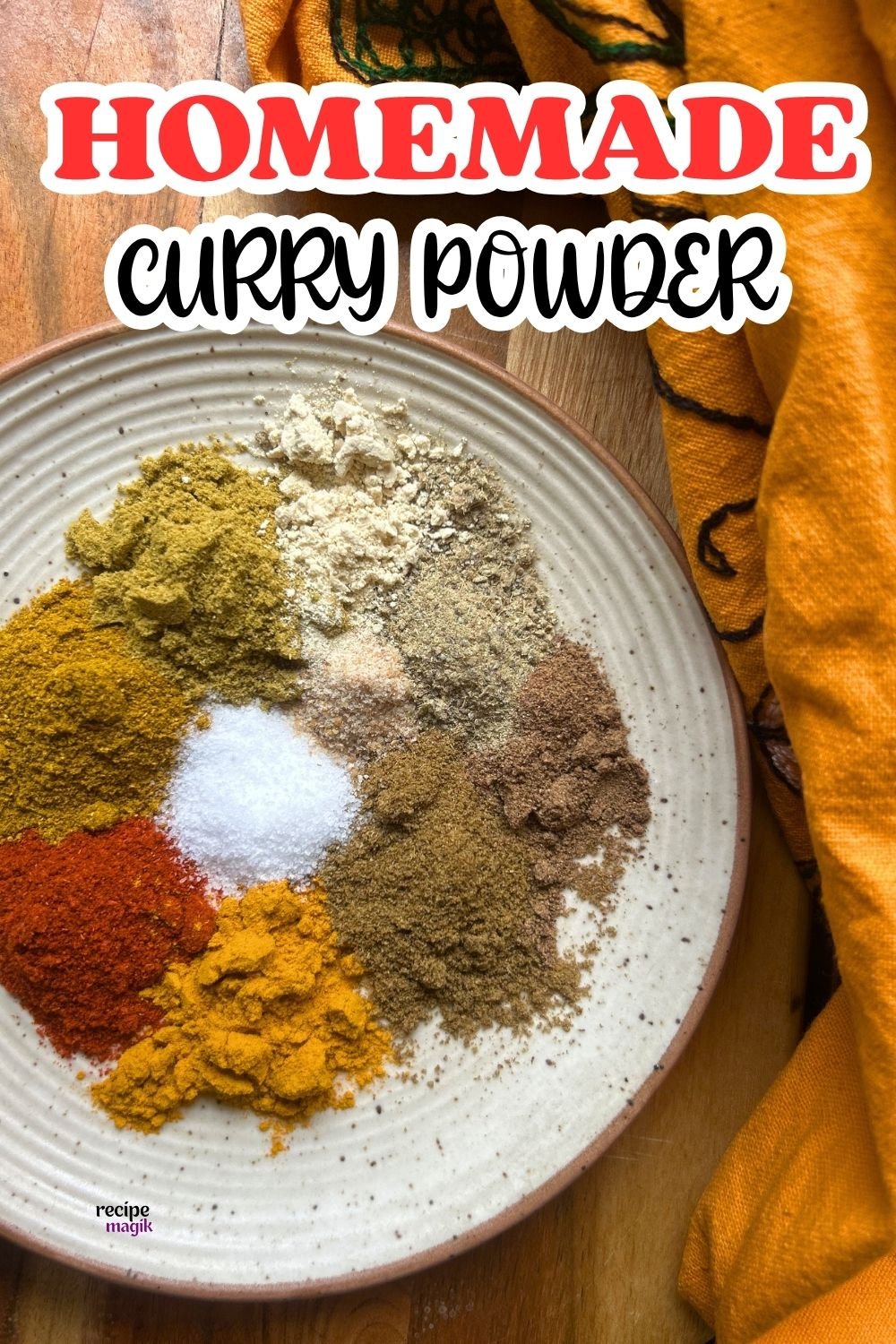
Why Commercial Curry Powder Fails
If you have Indian roots or have eaten home-cooked Indian food, the discrepancy between authentic meals and the curry powder sold in the USA, UK, Europe, and Australia is immediately obvious.
The standard yellow "curry powder" lining Western supermarket shelves is largely a historical remnant of the British Raj—an attempt to bottle the complex, varied flavor profiles of regional Indian cooking into a single, mass-produced dust.
Over time, these commercial blends have been heavily diluted. When you open a standard jar of store-bought curry powder in the USA, you are often met with a flat, one-dimensional aroma.
The dominant ingredient is almost always coriander powder, bulked up with cheap turmeric for a bright yellow color, but completely lacking the intricate balance of warming and aromatic spices.
I created this blend out of frustration with those commercial options. I wanted a foundational spice mix that actually tasted authentic—one that mirrors the spice boxes (masala dabbas) found in Indian homes.
Why You Should Make It Yourself
- True Authenticity: You control the ratios. Instead of a coriander-heavy filler, you get a balanced harmony of earthy, sweet, and smoky notes.
- Maximum Freshness: Ground spices contain volatile oils that degrade over time. Store-bought powders sit in warehouses for months. Mixing your own from relatively fresh individual spices ensures a much more potent flavor.
- Unmatched Convenience: Indian cooking often requires opening six to ten different spice jars for a single dish. This blend acts as a master key. By preparing it in bulk, your weeknight cooking becomes infinitely faster without sacrificing quality. You will no longer need to buy or measure individual portions of cinnamon, coriander, or garam masala for daily meals.
Sourcing the Ingredients Globally
One of the greatest advantages of this recipe is its accessibility. You do not need to hunt down obscure ingredients; everything in this blend is widely available globally.
- In the USA: Local supermarkets carry the basics (coriander, cumin, turmeric, paprika). For Garam Masala and Asafoetida (Hing), your best option is an Indian grocery store like Patel Brothers, or the international aisle of larger chains like Wegmans or Whole Foods.
- In the UK: The UK has phenomenal access to Indian spices. Supermarkets like Tesco, Sainsbury’s, and Asda carry almost everything in their World Foods aisles. Independent South Asian grocers will offer bulk bags of these powders at a fraction of the supermarket price.
- In Australia: Coles and Woolworths carry the foundational spices. For a more authentic Garam Masala and Asafoetida, visit local Indian grocers in major cities, or look for brands like Hoyt’s in the standard spice aisle.
- Across Europe: Depending on the country, Asian and Middle Eastern markets are your best bet for finding bulk, high-quality spices like cardamom and nutmeg powders. Asafoetida can occasionally be found in specialty spice shops or ordered easily online.
Regardless of your location, prioritizing an Indian grocery store for your Garam Masala and Asafoetida will yield the most authentic results.
The Recipe: My Authentic Master Curry Blend
This recipe yields a small batch that fits perfectly into a standard spice jar. It can easily be scaled up by doubling or tripling the ratios.
Ingredients
- 2 tablespoon Coriander powder: The earthy, slightly citrusy foundation of the blend.
- 1 tablespoon Cumin powder: Provides a deep, savory, and slightly nutty backbone.
- 2 teaspoon Smoked paprika: Adds a vibrant red color and a subtle smokiness without overwhelming chili heat.
- 1 tablespoon Garam Masala: A complex, warming blend that elevates the entire mixture.
- 1 teaspoon Turmeric powder: For the classic golden color and earthy bitterness.
- 1 teaspoon Cinnamon powder: Adds a sweet, woody warmth essential to rich gravies.
- 1 teaspoon Nutmeg powder: Provides a slightly sweet, nutty depth.
- 1 teaspoon Cardamom powder: Cuts through the heavier spices with a sharp, floral brightness.
- 1/4 teaspoon Asafoetida (Hing): The secret weapon of Indian cooking. It provides a pungent, allium-like umami depth that mimics garlic and onions.
Step-by-Step Method
Step 1: Preparation Ensure your mixing bowl, measuring spoons, and storage container are completely bone-dry. Even a single drop of moisture will compromise the shelf life of your spice blend and cause clumping.
Step 2: Combine Add all the ingredients—coriander, cumin, smoked paprika, garam masala, turmeric, cinnamon, nutmeg, cardamom, and asafoetida—into the mixing bowl.
Step 3: Mix Thoroughly Using a dry whisk or a fork, mix the powders together vigorously. Ensure there are no clumps, particularly from the brown spices like nutmeg and Garam Masala. The resulting color should be a rich, warm, reddish-brown.
Step 4: Storage Transfer the blended curry powder into an airtight glass jar or container. Store it in a cool, dark place, such as a closed pantry cabinet, away from direct sunlight and the heat of the stove. Proper storage preserves the volatile oils in the spices.
Step 5: Usage When cooking your curry base (usually a mixture of sautéed onions, ginger, garlic, and tomatoes), add 1 to 2 teaspoons of this blend directly into the hot oil and vegetables. Let the spices toast for 30 to 60 seconds to release their oils before adding your main protein, vegetables, or liquids. Adjust the quantity based on the size of the dish and your personal flavor preference.
Alterations and Simplifications
Not everyone has a perfectly stocked spice cabinet, and buying every single jar can initially feel like an investment. If you want to make this blend but are missing some of the sweeter, warming spices, you can safely adapt the recipe while maintaining its authenticity.
If you do not have cinnamon powder, nutmeg powder, or cardamom powder, simply skip them.
Do not let their absence stop you from making this blend. The Garam Masala you are already adding to the mix is specifically designed to carry these exact flavor profiles. A traditional Garam Masala consists of roasted and ground cinnamon, cardamom, nutmeg, cloves, and black pepper. By omitting the individual extra teaspoons of cinnamon, nutmeg, and cardamom, and relying solely on the 1 tablespoon of Garam Masala, your blend will remain entirely authentic, slightly milder in its sweet-warming notes, but perfectly balanced for daily Indian cooking.
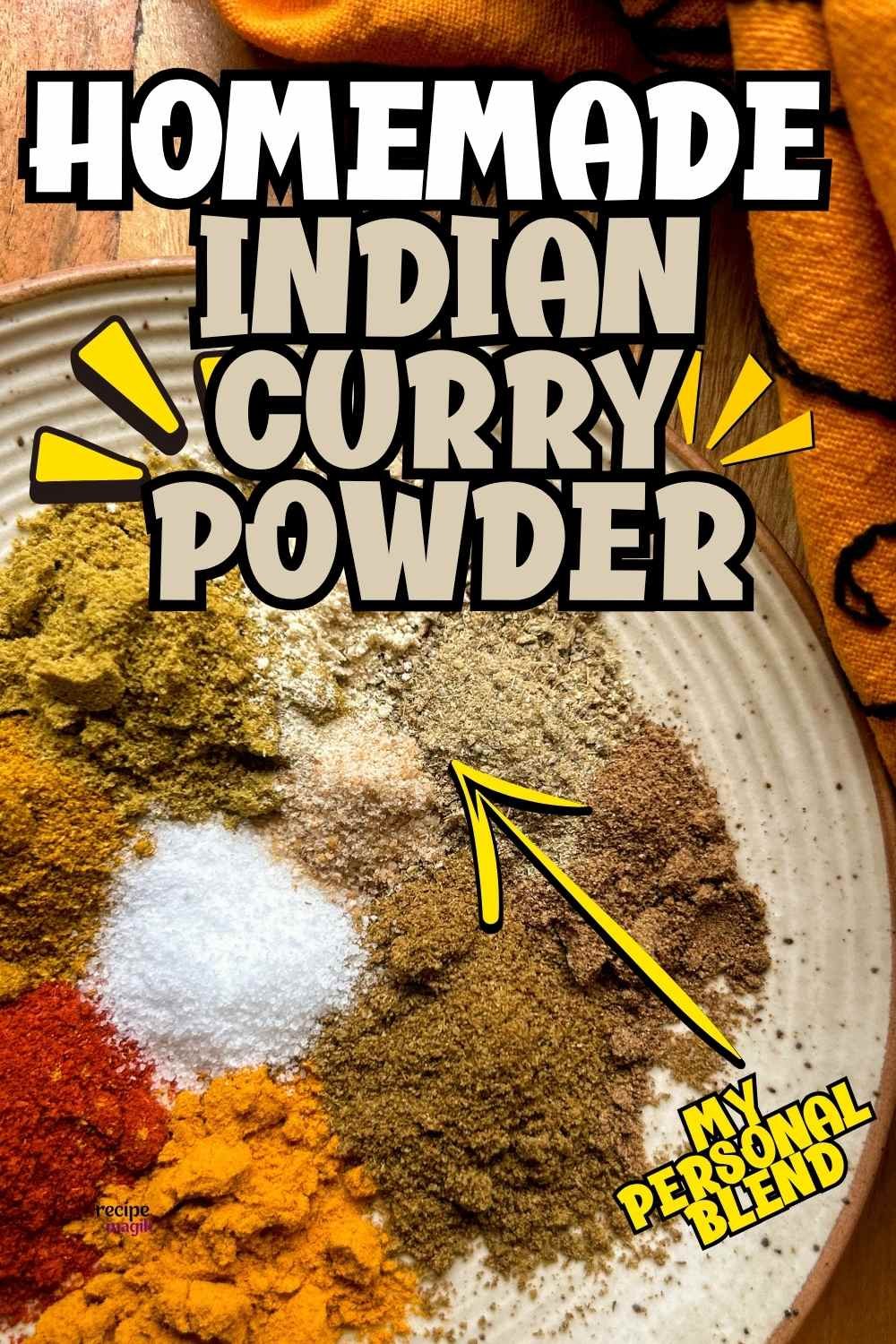
Homemade Curry Powder Recipe
INGREDIENTS
- 2 tablespoon Coriander Powder
- 1 tablespoon Cumin Powder
- 1 tablespoon Smoked Paprika or Indian Chili Powder
- 1 teaspoon Turmeric Powder
- 1 teaspoon Ground Cinnamon
- 1 teaspoon Ground Nutmeg
- 1 teaspoon Ground Cardamom
- 1 tablespoon Ginger Powder
- ½ teaspoon Asafetida
- 1 teaspoon Salt & Pepper

INSTRUCTIONS
- Add all the mentioned ground spices in a mixing bowl and whisk until combined through
- Store in an airtight and dry spice jar at room temp.
Ask Me Anything