

Make rich, velvety classic eggnog from scratch without raw eggs. Tempered egg yolks, whole milk, heavy cream, and warm holiday spices—ready in 25 minutes for December gatherings.
A classic American Homemade Eggnog Recipe is something you NEED for the Holiday season. Whether you are making Orange Spiced Eggnog Muffins, eggnog Cinnamon rolls, or any other Christmas dessert like these Eggnog Cheesecake Bites (NO-BAKE), eggnog adds a holiday punch. Try this Eggnog Martini recipe

Winter is just around the corner, meaning it’s eggnog season! Yes, we know it’s the Christmas season, but can you imagine Christmas without eggnog? No, right?
While many great eggnog brands are available at the market, nothing beats homemade. Store-bought cartons are convenient in a pinch, yet nothing matches the depth of freshly simmered nutmeg, cinnamon, and clove. Even better, if the idea of raw eggs in holiday drinks makes you hesitate, this version gently tempers the egg yolks over low heat to about 160°F (71°C)—giving you a thick, custard-rich pour with peace of mind.
But if only making eggnog was so easy!
Many people get grossed out by the idea of making eggnog with raw eggs, but this buggnog recipe is different.
Our eggnog recipe does not use raw eggs, making it safe for you and your family.
This Homemade Eggnog is sweet and creamy and takes just twenty-five minutes to make.
Jump to:
- What is Eggnog?
- What are the ingredients of Eggnog?
- History of Eggnog?
- What are the ingredients to make eggnog?
- How to make Traditional Eggnog?
- Can I make vegan Eggnog?
- How to make Keto Eggnog?
- How long does eggnog last in the fridge?
- Can you freeze Eggnog?
- What spice is most often used in eggnog?
- How is Eggnog best served?
- How to store eggnog?
- Top Tips to Make the Best Eggnog at Home
- How to Make Classic Eggnog Recipe
What is Eggnog?
Eggnog has a very old history.
We can trace its origins to the Middle Ages, when the rich and elite used to toast to eggnog for excellent health and prosperity, just like we do now!
Eggnog traces its lineage back to medieval European warm ale-and-egg possets before evolving in 18th-century America, where milk and cream replaced ale, and rum or whiskey became common additions (famously served by George Washington). Over time, eggnog became a staple of American holiday hospitality across the Holiday season.
What are the ingredients of Eggnog?
Eggnog is a classic Christmas recipe with Egg Yolks, Granulated Sugar, Milk, Heavy cream, and spices like Ground Cinnamon, Nutmeg, Cloves, and Kosher Salt. Many people spike it with beverages of choice.
History of Eggnog?
Anyway, getting back to history, eggnog came to America during the 18th century.
Americans used to spike it with whiskey and rum, and the drink became so American that even George Washington served it to his guests!
Eventually, eggnog came to be recognized as a Christmas tradition.

What are the ingredients to make eggnog?
We’ll make classic eggnog, which means the ingredient list includes familiar items like ground cinnamon and nutmeg.
You should not have difficulty finding the following ingredients at your local grocery store.
However, when it comes to eggs, make sure you get pasteurized eggs, as they are the safest and reduce the risk of salmonella.
- Egg Yolks (6 large): Build richness and body without needing heavy stabilizers. Save the whites for meringue cookies, pavlova, or an omelet.
- Granulated Sugar (1/2 cup): Sweetens cleanly so the warm spices stay front and center.
- Whole Milk & Heavy Cream (2 cups) & (1 cup): The two-to-one dairy ratio delivers classic velvetiness. Skip skim milk—it makes the base thin and watery.
- Pure Vanilla Extract: Vanilla rounds out the dairy and spice notes, while a pinch of salt keeps the sweetness balanced.
- Ground Nutmeg and Cinnamon: Ground nutmeg, cinnamon, and a whisper of ground cloves define the flavor. Grating whole nutmeg right before serving makes a noticeable difference in aroma.
Classic Eggnog
- Everything as above
- Light rum or Bourbon
See the recipe card for quantities.
How to make Traditional Eggnog?
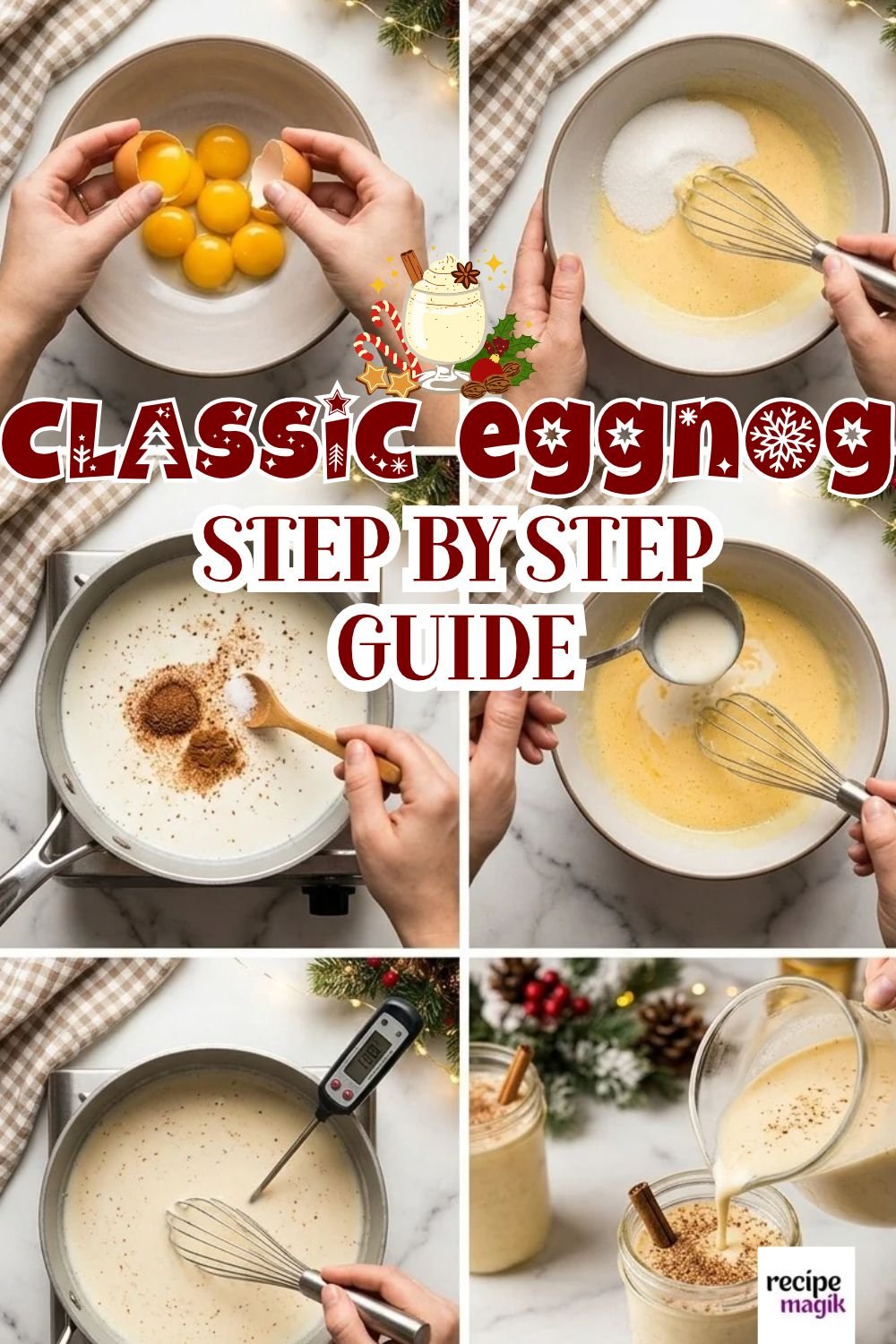
Many recipes call for using raw eggs, but that’s not the case with this recipe. We'll temper the eggs instead to make this eggnog.
This recipe is perfect for those who struggle with raw eggs or don’t like raw It
It doesn’t take longer than thirty minutes to make, making it a perfect quick drink for your cold nights!
Step 1: Crack open your eggs and separate the yolks from the whites. Keep the egg whites aside; you won’t need them for making the eggnog. Meanwhile, put all the egg yolks in a medium-sized bowl.
STEP 2: Combine Granulated Sugar with Egg yolks. Use a whisk to beat them together until the egg yolks and sugar form a creamy mixture.

Set this egg yolks and sugar mixture aside and pull out a saucepan. Place the saucepan over medium heat.
Add cream and milk to the saucepan and stir it for a few minutes. Then add the ground nutmeg and kosher salt. Start whisking the mixture again and keep whisking until it reaches a simmer.

STEP 3: Now, it’s time to temper the egg yolks. This will ensure your egg is evenly tempered, maintaining the same consistency and not getting curdled.
STEP 4: To temper the eggs, add one big spoonful of your hot milk mixture and then whisk it thoroughly. Then again, add one more spoonful of hot milk and whisk again. Keep repeating this process until all the milk is combined with the egg yolks.

STEP 5: Now put the combined mixture back in the saucepan over medium heat and whisk again until it thickens slightly. Make sure you keep the heat low.
You can stop after the temperature reaches around 160 degrees Fahrenheit. Once that’s done, remove the saucepan from the stove and turn off the heat. Add the vanilla extract and mix.

STEP 6: Your eggnog is now mostly ready! Just pour it into a container and seal it with plastic wrap. Then let your eggnog chill in the refrigerator to thicken up more. 8.
STEP 7: Your eggnog is now completely ready! Just serve it with a sprinkle of cinnamon and a dollop of heavy cream. You can also spike your eggnog with your preferred beverage!
Can I make vegan Eggnog?
Even though the name eggnog has ‘egg’ in it, that doesn't mean you can’t make it vegan.
All you need to do to make Vegan Eggnog is to replace regular milk with dairy-free milk and eggs with thick coconut cream.
For the topping, you can replace heavy cream with vegan whipped cream or coconut cream.
And that’s it; you are good to go with making vegan Eggnog!
How to make Keto Eggnog?
To make Keto Eggnog, I use Almond milk, vanilla protein powder, and zero-calorie sweetener as replacements for Whole Milk, Heavy Cream, and Granulated Sugar, respectively. Almond Milk Eggnog is so easy to make and just the best healthy Eggnog recipe you could ever ask for.
Almond Milk Eggnog is your perfect lactose-free eggnog—ch you will absolutely LOVE it!

How long does eggnog last in the fridge?
Homemade Eggnog can last for 2-3 days in the refrigerator if stored at a cool temperature.
Store-bought eggnog can be refrigerated for about 5-6 days after opening
Canned Eggnog, if not opened, can be stored for 4-5 months if refrigerated. If opened, canned eggnog can be refrigerated for 5-6 days.
Can you freeze Eggnog?
YES! You can store Eggnog in an airtight container and freeze it for up to 6 months. Just leave a little room at the top of the bottle to allow it to expand when it freezes! Both store-bought and homemade Eggnog can be frozen.
What spice is most often used in eggnog?
Ground Spices like Ground Cinnamon and ground nutmeg are most commonly used to spice Eggnog. Also, Orange Juice is sometimes added to give it a tropical taste. Orange-spiced eggnog tastes so good. Try my Orange Spiced Eggnog Muffins
How is Eggnog best served?
Generally, eggnog is served chilled and plain for a classic Christmas treat. You can garnish with a little ground Nutmeg, some fresh Orange Zest, Orange Peel, and candied Cranberries on top for a perfect holiday treat!
How to store eggnog?
Eggnog does not have a very long shelf life, especially homemade eggnog, since it doesn’t have any preservatives. Even so, you can easily preserve homemade eggnog for up to three days.
Refrigerate: Store it in an airtight bottle or container inside the refrigerator. Please don’t keep it at the refrigerator door, as the temperature fluctuates.
You must keep your eggnog constantly chilled to preserve it for as long as possible.
Top Tips to Make the Best Eggnog at Home
If you think your eggnog has come out too thick, add a little milk and blend it to get the desired consistency.
If you want very fragrant eggnog, grind your own nutmeg and cinnamon at home. Freshly ground spices are much more fragrant than bottled ones.
Don’t use fat-free milk to make eggnog. Good eggnog has to be creamy and thick. But if you want a healthier eggnog, consider using coconut milk instead.

How to Make Classic Eggnog Recipe
Ingredients

Equipment
Method
- Separate the 6 eggs, placing the egg yolks in a medium mixing bowl and reserving the egg whites for another use. Add the granulated sugar to the yolks and whisk until smooth and pale.
- In a saucepan over medium heat, whisk together the whole milk, heavy whipping cream, ground nutmeg, ground cinnamon, ground cloves, and kosher salt until warm and just reaching a gentle simmer.
- Slowly whisk a spoonful or two of the hot milk mixture into the egg yolks to temper them, then continue adding more warm milk gradually while whisking constantly until combined.
- Pour the combined mixture back into the saucepan over low to medium-low heat. Stir continuously until slightly thickened and around 160°F (71°C) on a thermometer; remove from heat before boiling.
- Stir in the pure vanilla extract (and optional alcohol, if using). Strain through a fine-mesh sieve into a pitcher or airtight container.
- Chill in the refrigerator until cold and thickened (it continues to thicken as it cools). If too thick after chilling, whisk or blend in up to 1/4 cup milk.
- Serve chilled topped with freshly grated nutmeg, ground cinnamon, or orange zest.
Notes
Recipe Notes
- Alcohol pairing: Rum, bourbon, or brandy pairs best with the warm spices—stir it in off the heat when adding the vanilla extract, or let guests spike their own glasses.
- Temperature check: Keeping the heat low and stopping near 160°F (71°C) helps thicken the custard base cleanly without curdling the yolks.
- Storage: Refrigerate in a sealed container away from the fridge door for up to 3 days, or freeze (with room for expansion) for up to 6 months.
Ask Me Anything